
Australian data centres mostly run on grid electricity, so they are roughly as green as the grid they draw from, plus how efficiently they use it. In 2025, renewables made up 42.7% of Australia’s electricity. Most “green hosting” claims rest on certificates or carbon offsets rather than the power itself, so it pays to ask what sits behind the label.
Key takeaways
- A data centre’s footprint depends on its electricity source and its efficiency, measured as PUE.
- “Carbon neutral” usually means emissions are offset, not that the servers run on renewable power.
- Ask any host what its claim covers, what evidence backs it and who checked it.
- A lean, fast website uses fewer resources, wherever it’s hosted.
Where do Australian data centres get their power?
From the grid, almost entirely. The Clean Energy Council reports that renewables generated 42.7% of Australia’s electricity in 2025 (Clean Energy Council). The rest still came mainly from coal and gas, and the mix differs from state to state.
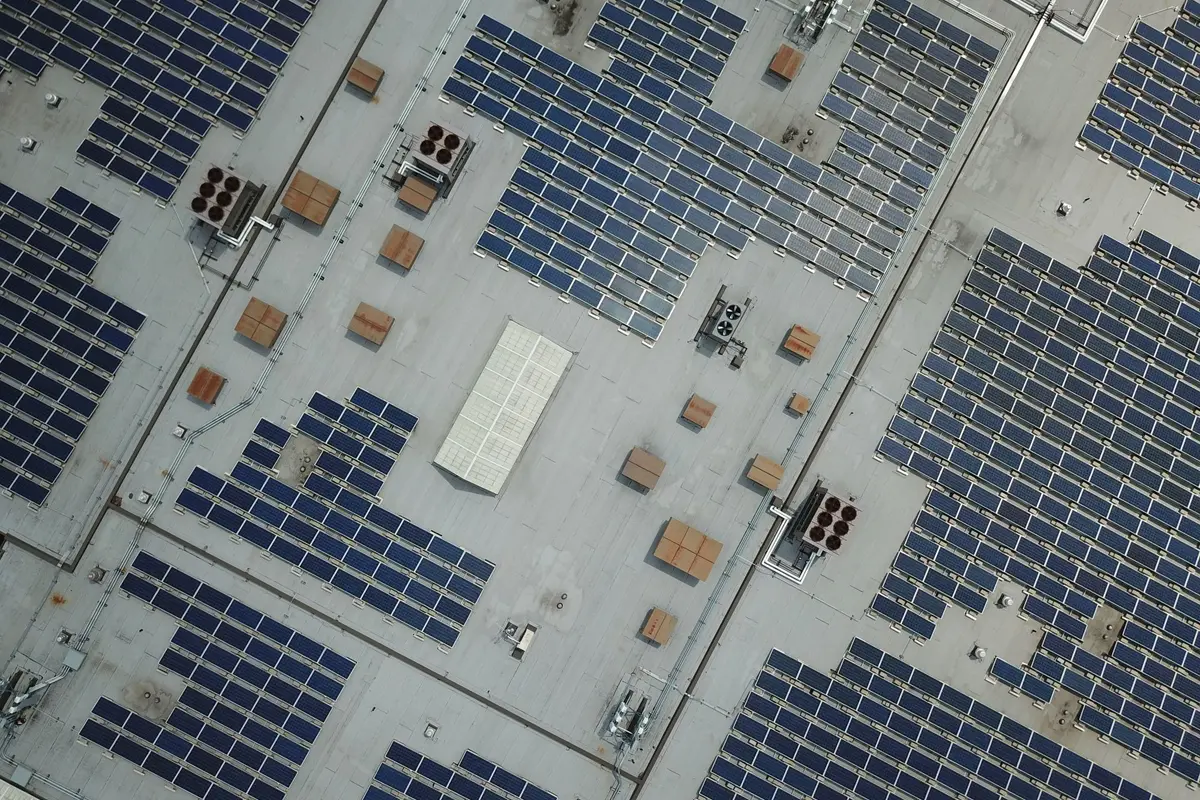
Rooftop solar on a data centre helps, but it can’t come close to running one. NEXTDC’s FY25 report shows its solar panels produced about 885,000 kWh, while its sites used 525,291 MWh in total (NEXTDC FY25 ESG Report). That’s under 0.2% from on-site solar. The report states plainly that the company sources its electricity from the local grid.
What is PUE, and why does it matter?
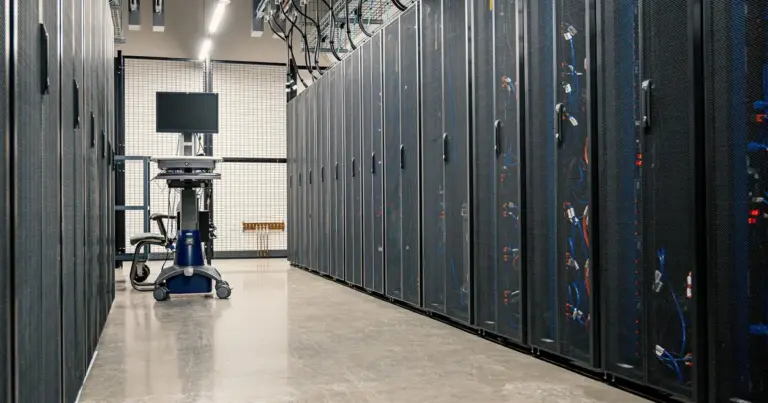
Power usage effectiveness (PUE) compares a data centre’s total power use with the power that reaches the servers. A PUE of 1.0 would mean every watt goes into computing. Anything above that is overhead: cooling, lighting and backup systems.
NEXTDC reported a portfolio PUE of 1.44 for FY25, up slightly from 1.42 in FY24. It put the rise down to changing customer loads and new facilities ramping up. In plain terms, for every 100 units of power its servers used, about 44 more went on supporting them.
Water matters too. Many data centres use water for cooling. NEXTDC reports this as water usage effectiveness: 2.25 litres per kilowatt-hour of IT energy in FY25. Few hosts publish figures like these at all, so their presence is a good sign in itself.
What do “green”, “carbon neutral” and “100% renewable” hosting mean?
These labels can describe very different things:
- Renewable power at the source. On-site generation, or a contract with a specific wind or solar farm. The strongest claim, and the rarest.
- Renewable certificates. The host buys certificates matching the renewable energy it uses, while drawing power from the grid as before.
- Carbon offsets. The host pays for projects elsewhere to balance its emissions. The servers still run on the grid mix.
The scope matters as much as the method. NEXTDC holds Climate Active carbon neutral certification for its own corporate operations. Customers can choose to offset the emissions of their own equipment through its NEXTneutral program (NEXTDC). So a host in a NEXTDC facility shouldn’t call its servers “carbon neutral” unless it has joined that program or offset them some other way.
Standards also differ. The Green Web Foundation, which runs a widely used green hosting directory, doesn’t accept carbon offsets as evidence of green power. It wants proof of fossil-free electricity, such as power contracts or certificates.
How do you spot greenwashing in web hosting?
The ACCC’s guidance on environmental claims sets out eight principles. They include having evidence for your claims, not hiding important information and avoiding broad, unqualified claims (ACCC). Use the same test on a host. Ask:
- What exactly is green? The servers, the company’s offices, or both?
- How is it achieved? On-site power, a power contract, certificates or offsets?
- Who checked it? A named certification or an independent audit, not a badge the host made itself.
- When? The claim should cover the current or last year, not a goal for 2040.
A vague “eco-friendly hosting” banner with no answers to these questions tells you very little.
What can a small business do itself?
Your website’s share of a data centre’s power is tiny, but a lean site is still a better site. Smaller pages, fewer plugins and properly sized images mean less data sent on every visit. They also load faster, which helps sales and search, as our article on Australian hosting speed and SEO explains.
Delete old staging copies and unused sites you’re still paying to host. Choose a plan sized to what the site needs, not the biggest one available. And if a tender asks about your suppliers’ environmental credentials, quote what the provider actually publishes, with its scope.

Where do we stand?
We’ll be straight with you. We don’t market our hosting as carbon neutral or 100% renewable, because we can’t show that it is. What we can say is that we host in Australian NEXTDC data centres in Brisbane and Melbourne, run by an operator that publishes its energy, water and emissions figures each year.
We chose local data centres mainly for speed, support and accountability. Our article on Australian web hosting compares local and overseas hosting, and our guide to data sovereignty in Australia covers why tenders ask where data is stored. For security features, see our secure web hosting page, or compare our hosting plans.
Frequently asked questions
Is there 100% green web hosting in Australia?
Some hosts claim it, usually through renewable certificates or carbon offsets. Very few Australian data centres run directly on renewable power, because they draw from the grid. Ask what the claim covers and how it’s achieved before you rely on it.
What is a good PUE for a data centre?
Lower is better, and 1.0 is the theoretical ideal. A PUE of 1.44 means about 44% extra power goes to cooling and other overheads. Compare figures that are measured over a full year, not design targets.
Does carbon neutral hosting mean renewable energy?
Not necessarily. Carbon neutral usually means emissions have been measured and offset. The servers may still run on ordinary grid power. Renewable energy claims rest on power contracts, on-site generation or certificates instead.
Is hosting overseas greener than hosting in Australia?
Sometimes, if the overseas grid has more renewables. But every visit then travels further, and you lose local support and simpler privacy accountability. For an Australian audience, local hosting on an efficient, transparent operator is usually the better overall choice.
How can I make my website use less energy?
Make it lighter. Compress images, remove plugins you don’t use, use caching and delete old copies of the site you no longer need. These changes also make the site faster for visitors.


Sources
- 2025 a record-breaking year for Australian clean energy, Clean Energy Council, 26 May 2026
- FY25 Environmental, Social and Governance Report, NEXTDC, 2025
- Sustainability, NEXTDC
- What we accept as evidence of green power, Green Web Foundation
- ACCC releases eight principles to guide businesses’ environmental claims, ACCC, 12 December 2023