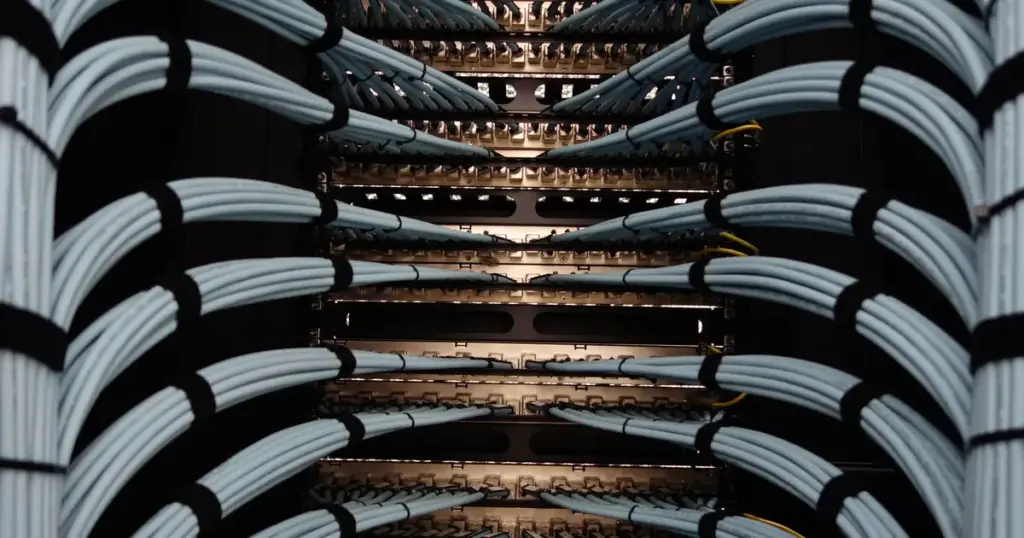
NEXTDC is an Australian data centre operator whose buildings house servers for clouds, telcos and web hosts. A Tier IV certification means a facility is built so that any single equipment failure or broken power or cooling path shouldn’t interrupt the servers inside. For your website, that makes the building the most reliable layer. The servers, the backups and the website itself still need their own care.
Key takeaways
- Tier IV means “fault tolerant”: one failure anywhere in power or cooling shouldn’t stop the servers.
- Certification is per facility, and there are three kinds: design, constructed facility and operations.
- Power, cooling, security and connectivity are the four layers that keep a site reachable.
- A data centre’s guarantee covers the building, not your website. Your host’s guarantee is the one you get.
- Most website outages we see start in software, not in the building.
What is NEXTDC?
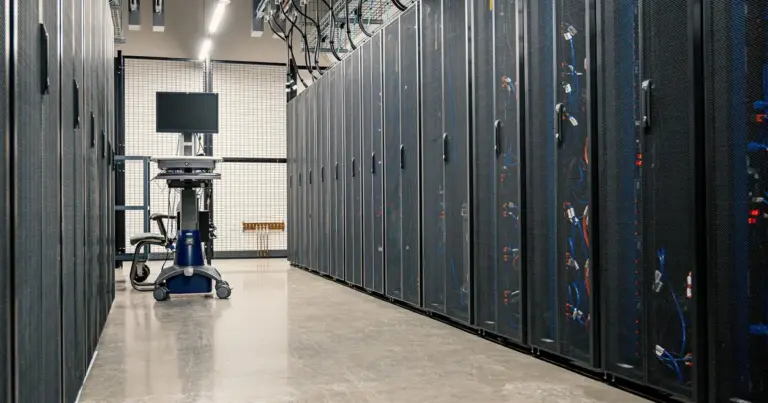
NEXTDC builds and runs data centres: secure buildings full of racks, power and cooling that other companies rent space in. It has facilities in Sydney, Melbourne, Brisbane, Perth, Canberra, Adelaide, Darwin and the Sunshine Coast (NEXTDC).
It describes itself as carrier and vendor neutral. That means it doesn’t sell you internet or cloud services itself. Instead, many network providers and cloud platforms connect inside its buildings, and tenants choose between them. A web host like us rents space and connectivity there, and runs its own servers on top.
What does Tier IV actually mean?
The Uptime Institute, an independent body, rates data centres from Tier I to Tier IV. NEXTDC’s published specifications explain the top two levels clearly (NEXTDC technical specifications):
- Tier III, concurrently maintainable. Every component that supports the servers can be shut down for maintenance without stopping the facility. That covers planned work.
- Tier IV, fault tolerant. Builds on Tier III so that any individual equipment failure or distribution path interruption has no impact on the facility’s operation. That covers unplanned failures too.
In plain terms, Tier III handles the electrician’s scheduled visit. Tier IV also handles the part that fails without warning at 2am.
Which certificate are you looking at?
Uptime Institute certifies three different things, and NEXTDC lists all three (NEXTDC certifications):
- Design documents: the plans meet the tier.
- Constructed facility: the finished building was tested on site and meets it.
- Operational sustainability: the people and procedures running it day to day are up to standard.
The last one matters more than it sounds. NEXTDC itself says “human error is the biggest challenge we face when it comes to outages” (NEXTDC blog). Certification also applies building by building. NEXTDC describes its network as Tier IV and Operational Sustainability certified, while listing its Canberra C1 site as Tier III. So “hosted at NEXTDC” doesn’t, on its own, tell you which tier your server sits in.
What keeps a website up inside a data centre?
Four layers sit between your website and the outside world. Here’s what each one does, using NEXTDC’s published Brisbane specifications as the example.
Power
NEXTDC’s Brisbane specifications list N+N power delivery to racks, meaning two independent supplies. They also list UPS systems that carry the load the instant mains power drops, and generators with at least 24 hours of fuel stored on site (NEXTDC). A storm that blacks out the suburb shouldn’t take the building’s servers down.
Cooling
Servers turn electricity into heat, and overheated hardware shuts itself down. The same specifications list N+1 cooling, which means at least one more cooling unit than the load needs, plus a minimum of 24 hours of water stored on site. If you’re curious about the energy and water side, our article on green web hosting Australia covers it.
Physical security
NEXTDC describes six layers of security, from perimeter fencing to biometric entry and electronic rack locks, monitored around the clock (NEXTDC security). Its facilities hold ISO 27001 certification, and most are certified to PCI DSS, the card industry’s security standard. That’s the physical side of secure web hosting: nobody walks in and pulls a drive.
Connectivity
NEXTDC says its customers can reach more than 70 global carriers. With several networks in one building, traffic has more than one way in and out. Being in Australia also keeps the trip short for local visitors. Our article on Australian hosting speed SEO explains how that feeds into Core Web Vitals.
What can’t a Tier IV data centre do for your website?
This is the part hosting marketing tends to skip. NEXTDC’s 100% uptime guarantee is a promise to its own customers, the companies renting space. It covers power, cooling and the building. It doesn’t cover a web host’s servers, and it certainly doesn’t cover your WordPress plugins.
In our experience, most website outages start in software: a failed update, a full disk, a plugin conflict or a hack. Patchstack counted 11,334 new WordPress vulnerabilities in 2025, 91% of them in plugins (Patchstack). No building can patch those for you.
So the guarantee you actually get is your host’s, and it’s usually lower than the data centre’s. Ours is 99.9%. Our guide to the uptime guarantee explains what that number means in hours, and what counts as downtime.
What should you ask a host that says “NEXTDC”?
- Which city? The closer to your customers, the shorter every page request.
- Which certification? Design, constructed facility or operations, and for which building.
- Where are the backups? A copy in a different location protects you if the server itself fails.
- What’s your own guarantee? The host’s SLA, not the data centre’s, is what applies to you.
- Who looks after the website? Updates, security and restores sit outside the building’s job.

How do we use NEXTDC?
We host in Australian NEXTDC data centres in Brisbane and Melbourne, chosen for capacity and resources. On top of the building, our hosting plans set out clear CPU cores, memory and disk, with free SSL and free migration on every plan. Support runs from email and chat on Personal plans to 7-day phone support on Business plans, and there’s a 24/7 emergency line on 0426 833 422.
For the layer below that, our Maintain & Protect care plans handle updates, backups and security for the website itself.
Frequently asked questions
Is NEXTDC a web host?
No. NEXTDC runs the buildings: power, cooling, security and network access. Web hosts, cloud providers and large companies rent space inside and run their own servers. You buy hosting from a host, which may or may not use NEXTDC.
Does Tier IV mean my website will never go down?
No. Tier IV protects against failures in the building’s power and cooling. Your website can still go down because of a server fault, a software update, a full disk, a hack or an expired domain. Those are handled by your host and by whoever maintains the site.
What’s the difference between Tier III and Tier IV?
Tier III lets any component be taken offline for planned maintenance without stopping the facility. Tier IV adds fault tolerance, so an unplanned failure of any single piece of equipment or power or cooling path shouldn’t affect operations either.
Is “built to Tier IV standards” the same as certified?
No. Only the Uptime Institute issues Tier certifications, and it certifies the design, the constructed facility and operations separately. Ask which certificate a facility holds and for which building, rather than relying on a general description.
Does a NEXTDC data centre make my website faster?
Being in Australia helps, because local visitors’ requests travel a shorter distance, and good connectivity avoids bottlenecks. But most speed problems come from the website itself, such as large images, too many plugins or no caching, so the building is only part of the answer.

Sources
- Data centre locations, NEXTDC, accessed November 2026
- Brisbane Data Centres: Technical Specifications, NEXTDC, March 2024
- Certifications, NEXTDC, accessed November 2026
- Obsessed with the details so our customers’ business is always available, NEXTDC, October 2018
- Security risk management, NEXTDC, accessed November 2026
- State of WordPress Security in 2026, Patchstack