
Good website copy doesn’t need a gift for words. It needs four things on every page, in order: the problem your customer has, what you promise to do about it, proof that you can, and one clear next step. Write those in plain language, cut everything else, and most pages will bring in more enquiries than polished copy that says nothing.
Key takeaways
- Use the same four-part frame on every page: problem, promise, proof, next step.
- Most visitors scan rather than read. Headings and the first line of each section do the heavy lifting.
- Write about the customer’s situation, not your company history.
- Proof must be real. Fake or edited testimonials break Australian Consumer Law.
- Write the way you’d explain it on the phone, then cut a third.
Why does most small business website copy fall flat?
Because it’s written about the business, not the customer. “Established in 2009, we are a family-owned company committed to quality and service” tells a visitor nothing they can use. They arrived with a problem: a leaking roof, a tax deadline, a wedding to cater. Copy that converts starts there.
The second reason is length without structure. People don’t read web pages the way they read a letter. In Nielsen Norman Group’s classic study, 79% of test users always scanned a new page and only 16% read word by word. Rewriting the same page to be concise, scannable and objective made it 124% more usable (Nielsen Norman Group, 1997). The study is old, but phones have only made scanning more common.
What is the simplest framework for website copy?
Use these four parts, in this order, on your home page and every service page.
1. Problem: start where the customer is
Open with the situation, in the words customers use when they ring you. Look at your enquiry emails and Google reviews for phrases worth borrowing. “Hot water system died this morning?” beats “Comprehensive plumbing solutions” every time.
2. Promise: say what you do and what changes
One or two sentences on what you do and the result. Be specific about area, speed and scope: “Same-day hot water replacement across Logan and Brisbane’s south, installed and tested before we leave.” Specific promises are believable. Vague ones sound like everyone else.
3. Proof: show, don’t claim
Every promise needs backing. Good proof includes real reviews with names, photos of your own work, licence numbers, years of experience, guarantees and rough prices. Even “most jobs cost $X to $Y” builds more trust than “competitive rates”.
Keep it genuine. The ACCC says it’s against the law for a business to create fake or misleading reviews, or to “suppress or edit negative reviews”. It once acted against a removalist that copied testimonials from another site, changed them and published them as its own (ACCC).
4. Next step: make it obvious
Tell people exactly what to do: “Call now for a same-day quote” or “Book a free 15-minute consult”. One main action per page. Put it near the top, after each major section and at the end, so nobody has to scroll to find it.

How do I write a homepage headline?
Your headline has one job: tell the visitor they’re in the right place. Three formulas work for almost any business:
- What you do + who for + where: “Bookkeeping for tradies on the Gold Coast.”
- The result: “Your BAS done right, on time, every quarter.”
- The problem, answered: “Locked out? A locksmith at your door within the hour.” Only promise what you deliver.
Put the formula you like best under a heading, then add one supporting line underneath. Skip clever wordplay. A visitor who has to work out what you do will usually leave instead.
What makes copy easy to read on a phone?
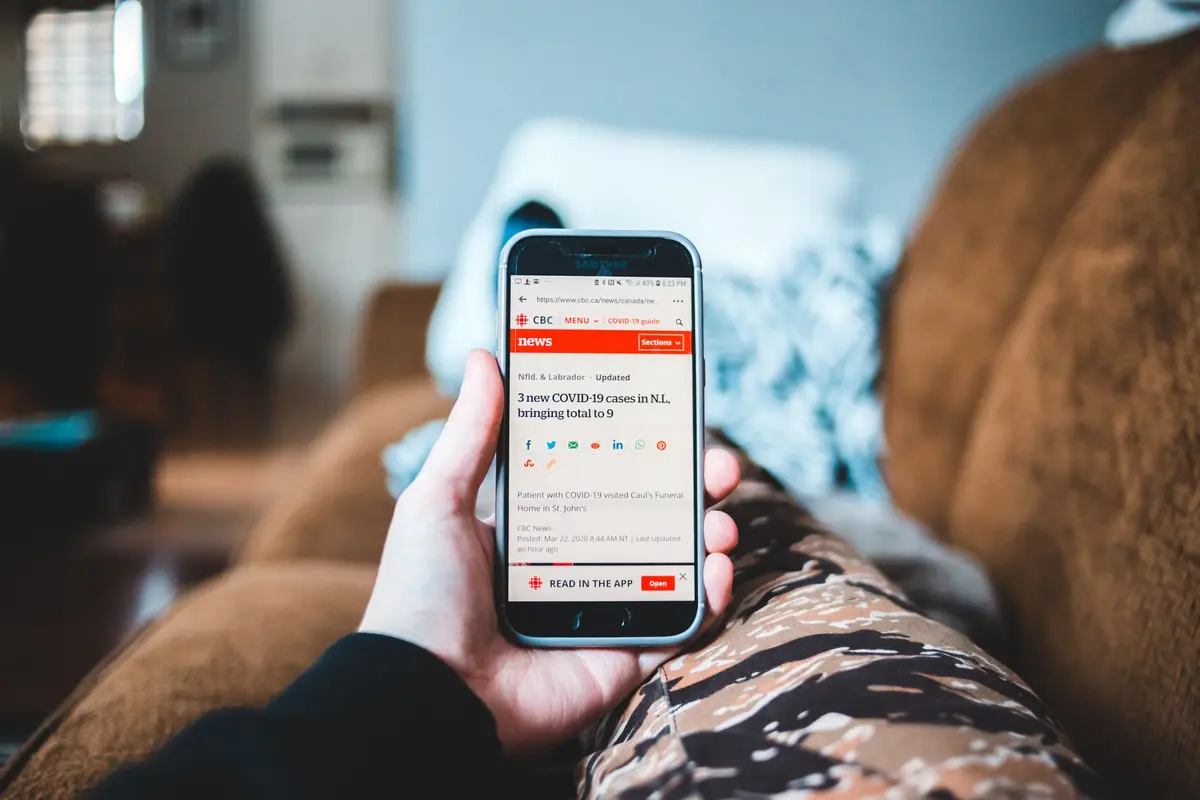
Close to half of Australian web traffic is on mobile: 48.6% in October 2026 (StatCounter). On a small screen, a long paragraph looks like a wall. A few habits help:
- Keep paragraphs to two to four sentences.
- Use headings that say something, such as “How much does a roof inspection cost?”, not “Pricing”.
- Put the key point first in every section, then the detail.
- Use lists for steps, features and what’s included.
- Write “you” more than “we”.
I hate writing. How do I actually get it done?
Don’t write. Talk. Record yourself explaining a service to a new customer on the phone, then transcribe it with your phone’s dictation or a transcription tool. Spoken explanations are usually clearer than anything you’d type from scratch. Then edit in three passes:
- Shape it. Sort what you said into problem, promise, proof and next step. Move anything that doesn’t fit to another page or delete it.
- Cut it. Remove a third of the words. Phrases like “we pride ourselves on” and “high quality” go first.
- Check it. Read it aloud. If you stumble, rewrite the sentence. Then ask a customer or friend what you do, based only on the page.
Google’s guidance points the same way. It asks whether content shows “first-hand expertise and a depth of knowledge”, and whether a reader will leave “feeling they’ve learned enough” to reach their goal (Google Search Central). Your own words about your own work tick both boxes.
What else should I fix while I’m rewriting?
New copy often shows up other problems. If every page uses a template layout that buries your call to action, our comparison of custom website vs template design will help you decide what to change. If the site feels dated as well as wordy, read how often you should redesign your website before you spend on copy alone.
Small technical fixes help good copy get found and read. Adding schema markup for small business helps search engines understand your services, prices and reviews. Our website speed and improvement work covers faster pages, clearer forms and tidier layouts. And once your pages convert, email marketing for small business keeps those new customers coming back.
If you’d rather hand the whole job over, our design and marketing from the Next Level Creative family brings design, build and marketing together, so the layout is planned around your message.
Frequently asked questions
How long should a website page be?
Long enough to answer the questions a customer has before they contact you, and no longer. A service page often needs 300 to 800 words. Your home page can be shorter if it points clearly to each service. Structure matters more than length.
Should I write in first person or third person?
Use “we” and “you”. It reads like a conversation, which suits most small businesses. Third person (“ABC Plumbing provides…”) sounds stiff and distant. Sole traders can use “I” if they are the person customers will deal with.
Can I use AI to write my website copy?
As a starting draft, yes, but it can’t know your prices, your area, your process or your customers’ words. Generic AI copy tends to sound like every other business. Add your real details and proof, and cut anything you wouldn’t say out loud.
Can I edit a customer’s testimonial to fix spelling?
Be very careful. The ACCC warns that reviews edited after they were written can mislead customers. Fixing an obvious typo with the customer’s permission is low risk. Changing the meaning, or trimming out the negative parts, is not. When in doubt, publish it as written.
How often should I update my website copy?
Review it at least once a year, and whenever your services, prices or service area change. Update proof regularly too: fresh reviews and recent project photos show customers you’re active and still trading.



Sources
- How users read on the web, Nielsen Norman Group, 1997
- Online reviews for products and services, ACCC
- Desktop vs mobile vs tablet market share, Australia, StatCounter, October 2026
- Creating helpful, reliable, people-first content, Google Search Central